

June 2011
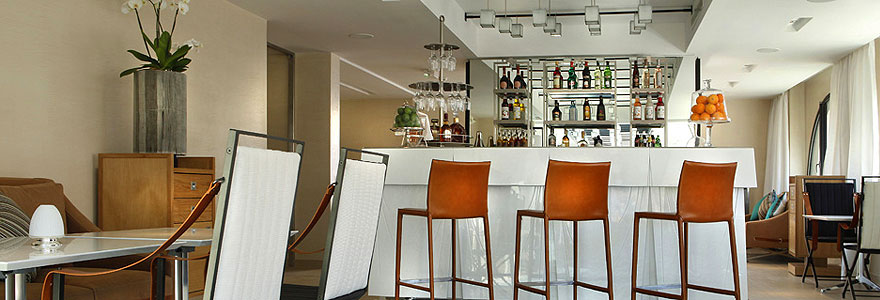

LA TABLE AT MAISON POURCEL - SHANGHAI

Shanghai spares no expense to welcome visitors and expatriates coming from all over the world to discover its lifestyle and savoir faire. This "revolution" did not spare the world of cooking and gastronomy. J&L Pourcel settled in that city where everything is possible. Between the rustic simplicity of small Chinese canteens and the grandiloquence of some gourmet restaurants, they created a place where you feel good, and get together to discover a different cuisine and French wines. French savoir-faire and lifestyle, just like at the blessed time of concessions, in a restaurant nestled in a lovely house, with that little something that makes the time spent at the table wildly irresistible.
COOKING CLASS
Cooking Classes on June 11th and 25th.
388 RMB/guest
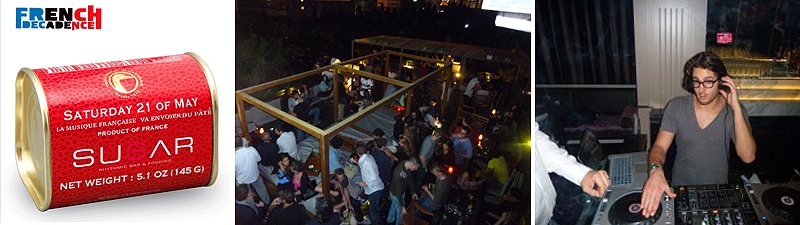
MAISON POURCEL - SUGAR AU 6e ÉTAGE
" SUGAR Rhythmic Bar & Fooding ".
A new name for a new concept on the 6th floor of MAISON POURCEL.
A new manager who organizes crazy nights and celebration memories, handsome Italian Mattia Oltrona Visconti. He will welcome you to sweet and sour flavored nights, typical nights of Shanghai.
FRIDAY NIGHT - CHAMPAGNE NIGHT.
Bubbles and wonders, in the lounge, with an exceptional view on the stars and the lights of the sleepless city.
Pay one drink, get one drink for free (glass or bottle). Cool Attitude and 70s disco music hits.
EVERY SATURDAY, FROM 1'30 PM TO 6'30 PM - RHYTHMIC BRUNCH
Chic brunch, sun and music on the deck. Don't forget your sunhat and your sun block, to nicely sunbathe while sharing a Mojito or giant Caïpirinhas.
EVERY SUNDAY. BLOODY MARY JUST AS YOU PLEASE, SIMPLY JUST AS YOU LIKE IT.
A bloody red, tomato red cocktail that was originally designed to fight hangover by Ernest Hemingway who wanted to be able to drink immoderately, without smelling of alcohol later on, in order to avoid a possible fight with his wife, whose name was...Mary.
A cocktail that Serge Gainsbourg loved. SUGAR welcomes you to discover and rediscover the most famous cocktail in the world. In other places, unscrupulous bartenders would tend to serve plain alcoholic gazpacho instead of Bloody Mary. At SUGAR, you choose the way you want to drink it
spicier, sourer, a little salty...or maybe without vodka, with sherry, tequila or beer instead...just the way you like it.
MAISON POURCEL GETS A "CITY WEEKEND AWARD"
The "City Weekend" magazine bestowed the 2011 "Awards" for restaurant industry, in different categories.
Maison Pourcel, which opened in July 2010, ranked best French restaurant in the city. A performance for our staff. Congratulations to chef Christophe Lerouy and general manager Harry Vieujot.
35, South Shaanxi Rd., Near Changle Rd.,
New Huangpu district. Shanghai . Chine
t. + 86 21 6215 8777
booking@maisonpourcel.com
www.maisonpourcel.com
CARRE BLANC - SUN & LOVE
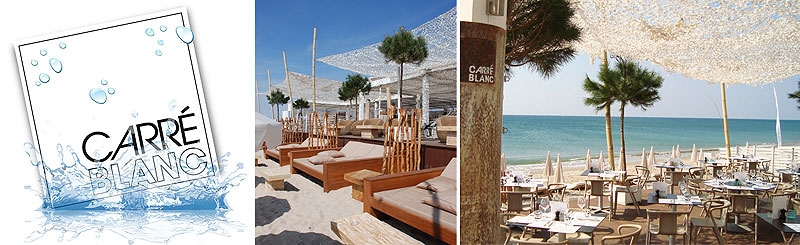
"Summer of Love"...that is the 2011 motto of CARRÉ BLANC.
The summer is coming to that little beach nested on the white sand of Villeneuve-lès Maguelone... Sun and party Fine white sand voluptuously trickling through your hands, silver blue water, ice cubes clinking in glasses of rosé or champagne, and swaying music. A sweet smell of "Ambre solaire", the songs of seagulls and the tasty cuisine of Jacques & Laurent Pourcel. Welcome to our summer. Soak up the sun, that sun that caresses your skin, far away from the traffic jams and the noise of the city, next to the sea that sings and dances. Summer will be hot at CARRE BLANC, with sunny gourmet days and enchanted, dancing nights.
NEW CARRÉ BLANC WEBSITE
The new website of Carré Blanc beach restaurant is online www.lecarreblanc.fr
With a direct access from Iphone, Facebook, Twitter, and from the Pourcel's blog, live experience of Carré Blanc summer events. You can also use it to book a table or a sun bed online.
Plage aménagée - Restaurant - Bar
Plage de Villeneuve-lès-Maguelone - Chemin du Pilou
34750 Villeneuve-lès-Maguelone. France
t. +33 (0)4 67 42 06 96
www.lecarreblanc.fr
Montpellier, the gifted city that reinvents itself every day.
A city fashioned and shaped by Georges Frèche since the 70s. He was the one who created the Polygone. The Antigone, built by fanciful, genius architect Ricardo Bofill. The Odysseum. All connected by the tramway: pop flower train (line #1), swallows train (line #2), sea animals train (future line #3) designed by Christian Lacroix. The tramway, a traveling streamer with trains that surround and protect the historical centre, the Écusson, totally, insolently steeped in culture and enriched by a mythical historical heritage.
Come with us to discover the capital city of Languedoc-Roussillon. A commercial meeting point, a students city, between the sea and the vineyards. A metropolis in constant motion - new buildings spring up every day - Montpellier jealously guards its rich heritage while rushing towards the future.
Discover the city centre alleyways and their thousands of years of history. Stroll in that typical Mediterranean place. Listen to the singing accent, in the shade of olive tress, where people still speak Occitan.
Montpellier was born a few kilometers away from the sea in 985, after being allocated to a certain Guilhem, first lord of a family that would reign over the lands for centuries.
The seigneury has been known since Middle Ages, a period of prosperity, when the Medical school and the Law school were created.
12th century. Montpellier becomes part of Aragon. Mary of Montpellier marries King Peter the 2nd of Aragon. Their union gave birth to trade with Spain...and to James I, the Conqueror, who built the city prosperity. The trade of red woolen fabric is the main business of the city that has monopoly on grain dye and cochineal dye.
14th century: the city is purchased by the King of France. Pope Urban V builds Saint Benedict monastery. Saint Rocco is born in a wealthy family of traders. He works miracles in Italy. He is the patron saint of the city. Jacques Cœur, treasurer of Charles VII makes his fortune.
During the 15th century, the city suffers from black plague, food shortage and famine.
It is undermined by the 16th century Reformation. Some people from Montpellier have to go into exile to escape death, despite Alès peace, in 1629.
François Rabelais, a priest and a doctor, teaches medicine at Montpellier university and publishes Pantagruel, Gargantua and other epic adventures. His friend Guillaume Rondelet creates an anatomy lab and publishes "Histoire entière des poissons" that is still referenced nowadays. Nostradamus gives astrological predictions.
17th century. Textile and chemical industries turn Montpellier into a wealthy city of trades. The architectural heritage is progressively built, with the construction of munificent town houses hiding treasures behind their discreet facades: stairways, patios, gardens, richly decorated rooms. Folies are built in the countryside.
The 18th century is sumptuously flamboyant. The city keeps getting more and more embellished, its emblematic piece being the promenade du Pêyrou, originally designed to celebrate the glory of King Louis XIV. High finance and medicine society are everywhere in the city and its countryside. Appearance is what matters. The Revolution is going smoothly over Montpellier.
François Lapeyronie becomes a surgery teacher and the official surgeon of King Louis XV.
19th century. "Lazard Major Works" enhance the urban setting. The modern city is set up. The city centre is renovated and modern buildings are built.
The textile industry is dying down. And quickly replaced by wine industry. Montpellier becomes a wine-producing capital city after the phylloxera crisis.
Auguste Comte studies at the Medical school and develops its positivist doctrine. Chemist Jean-Antoine Chaptal devises "chaptalization": a technique that improves wine by adding sugar to grape must.
Art is also invading the city. And so are painters. Frédéric Bazille, pioneer of impressionism and Gustave Courbet, who caused a scandal with his provocative painting, "L'origine du monde", carry their frames and paint brushes along the fragrant colorful Garrigue, next to the nearby sea.
Nowadays, Montpellier is carrying on with its development. With its new districts, it reaches the sea and the vineyards. The best architects in the world gather in the city to master the development of the Languedoc beauty. Under the eye of mythical modern painter, Pierre Soulages.
DISCOVER THE OLD CITY CENTRE OF MONTPELLIER. A few ideas...
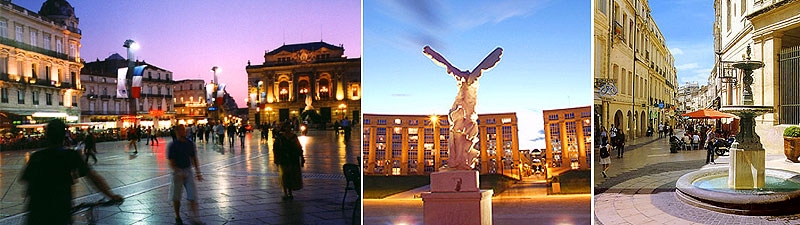
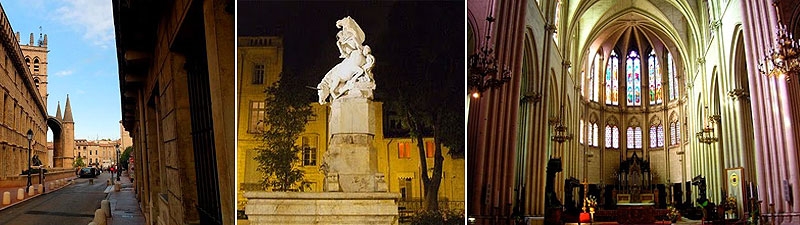
PLACE DE LA COMÉDIE and its 19th century Opera, twin building with Paris Garnier Opera. Meeting point, heart of the city. At the centre, the Three Graces statue.
Then follow the plane tress of the walkway to the Esplanade, graciously sharing their shade to take you to the Corum.
SAINT-PETER CATHEDRAL and its paved square. Old chapel of a 14th century Benedictine school.
The MEDICAL SCHOOL is built in a Benedictine monastery-school, which building was ordered by Pope Urban V in 1364.
The MEDIEVAL MIKVÉ (ritual Jewish bath of the 13th century), one of the oldest ones in Europe. A symbol that shows how the Languedoc city was a welcoming land for Jews from Andalusia, fleeing Spain.
LA PLACE DE LA CANOURGUE, nicely romantic, with its beautiful fountain of Unicorns.
THE URSULINES CONVENT. Founded back in 1327, became the property of Ursulines in 1621, designed to provide education to underprivileged young girls. It was then used as a rehab centre for protestants, and as a jail during the Revolution. It is now the key point for dance, with its Agora de la Danse, and its lovely courtyard, home of the Dance Festival.
MUSEUMS
 ATGER MUSEUM: a jewel that houses a collection of drawings (caricatures, portraits, landscapes...) by masters of the Flemish, the Italian, the German and the Dutch schools, such as Tiepolo, Veronese, Rubens, Fragonard, Watteau... in 1000 drawings and 5000 sketches donated by Jean-François Xavier Atger.
THE LANGUEDOC MUSEUM: in the Hôtel des Trésoriers-de-France. Rue Jacques Cœur. A must-see, with its triple stairway overlooking the courtyard, its friezes of cornices, its colonnades. Downstairs, roman rooms with a nice collection of capitals. The first floor houses the gothic area. Opulent décor, symbol of the wealth of the owners: lead baptismal basin, 13th century enamels, ivories, wooden tableware, Flemish tapestries, amazing furniture and china, Montpellier earthenware, paneled ceilings. Everything is still as it was, nothing was moved.
The second floor is dedicated to prehistory rooms and the room of popular traditions.
THE FABRE MUSEUM. It was created back in 1825 thanks to the generosity of a Montpellier-born painter François-Xavier Fabre. Fabre was trained by David, won the Prize of Rome and settled in Florence, where he became a mundane portraitist and experienced collector. With no heir, he decided to donate his treasures to his native city. A museum was then created and he was its very first director.
Through the years, the museum enriched its collections with donations of artists such as Bazille or Soulages, and legacies of rich collectors, such as Alfred Bruyas.
The Fabre Museum is an exceptional building that coherently and harmoniously presents old collections and modern art. It houses European art works from the Renaissance period to the current one. Paintings by Flemish and Dutch painters, masterpieces by renowned neoclassical and classical painters such as Fabre, Courbet, Delacroix, impressionist painters such as Monet, Manet, Bazille, Renoir, modern Soulages...
Must-sees: "Les femmes d'Alger dans leur intérieur" by Delacroix, "La rencontre" by Courbet, "La négresse aux pivoines" by Frédéric Bazille.
Enjoy immoderately the Soulages collection.
Visit: next to the Fabre Museum, department of decorative arts that opened in February 2010 within the CABRIÈRES-SABATIER D'ESPEYRAN HOUSE TOWN. When a private house becomes a museum, the visit is all the more moving.
It houses an exceptional, unique set of ceremonial pieces from an apartment that reproduces the atmosphere of the 18th and 19th centuries, with a collection of ceramics and a collection of decorative art.
Recommended break at Jacques & Laurent Pourcel's restaurant, INSENSÉ.
GARDENS AND PROMENADES
LE JARDIN DES PLANTES
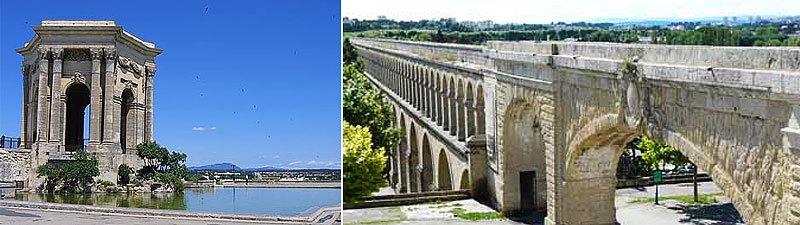
The oldest botanical garden in France, founded in 1583. Medicinal plants, jardin des simples, greenhouses, orangeries, English gardens, collection of Mediterranean plants. Unfamiliarity: a large ginkgo biloba planted in 1795 and an orange tree of Osages.
LA PROMENADE DU PEYROU: royal square, place of celebrations. Do not miss the water tower in the shape of a Corinthian temple. Right in the middle of the prone is the statue of King Louis XIV, the Sun King.
TOWN HOUSES
L'HÔTEL DE VARENNES. Old medieval house that was arranged and reorganized by its successive owners. It houses the Musée du vieux Montpellier, dedicated to the history of the city.
HÔTEL JACQUES COEUR, which became the HÔTEL DES TRÉSORIERS DE FRANCE in the 17th century and now houses the Languedoc Museum,
Recently renovated HÔTEL CABRIÈRES SABATIER D'ESPEYRAN. It houses the department of decorative arts of the Fabre Museum.
HÔTEL SAINT-CÔME. 18th century. It used to house the surgery amphitheatre. It is now the headquarter of the Commerce and Industry Chamber.
FOLLIES...
... THEY ARE EVERYWHERE !
Follies, an alteration of the word "fol", feuille, foliage, from the Latin word folium.
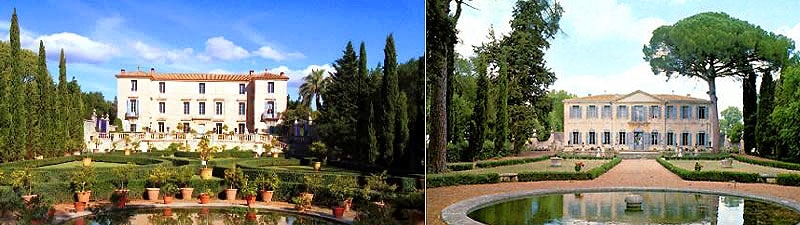
A madly pretty word to designate the houses that are hidden behind foliage. Huts!? No, they are extravagant countryside houses. Sweet delusions of grandeur.
Here and there, just like gems in the countryside. Nice castles, Palladian villas in the middle of French gardens filled with Mediterranean fragrances. Right from the 18th century, the city notables started building these country houses. Family houses. They left their town houses of the city centre. They escaped the noise of the city, the burning summer sun and took the road to the countryside to enjoy its fresh air and the pastoral delights. More than a lifestyle, defined by refinement, elegance and splendor, a certain way of showing off one's success, wealth and good taste. Exceptional green settings where rich cloth manufacturers, medicine teachers, grands bourgeois and Academicians gathered. Off by themselves.
A must-see
FLAUGERGUES
The oldest folly in Montpellier.
Built by financier Etienne de Flaugergues, at the end of the 17th century. An extremely sophisticated building, a villa lined with vineyards and boxwood. Sheltered by the vegetable world.
A castle of wonders, where everything is about harmony and balance. Sobriety. Elegance. A façade that calls for traveling, with a touch of Tuscan villa. The Flaugergues family has been living in the castle for ten generations, working in the vineyards and the gardens. Gardens are sumptuous and numerous: a French garden designed through 10000 box trees, a long alleyway of olive tress, a romantic English-style garden, true botanical garden housing rare essences brought back from the colonies and the whole world by the sailors of the family. Over 17 acres of land, bamboos from China, banana trees, palm trees and a giant sequoia harmoniously live together. As far as the eye can see, vineyards. Vineyards that produce high quality wines, appellation Coteaux du Languedoc-Grés de Montpellier.
Wander along the fragrant gardens and do not leave the place without visiting the castle. You will be dazzled by the inside. The master piece: the monumental stairway topped with a queen post vault. Do not miss the 17th century Flemish tapestries.
Take a gourmet break at the CHÂTEAU DE LA MOSSON restaurant.
Grandeur and decline. From the most sumptuous follies only remains the music lounge and its wonderfully, finely wrought stone walls, its buffet d'eau, its baroque fountain and a few pieces of furniture. The park became a public garden.
CHÂTEAU DE LA MOGERE
Classic Montpellier folly with a nice French-style garden where the water of the buffet d'eau, the waterfalls of loose rocks and the baroque fountain sings like crystal. Listed as a historical monument.
LE CHÂTEAU DE L'ENGARRAN
Genuine Louis XV style. Behind the magnificent fence from Mosson Castle, discover, in the middle of the vineyards, the most feminine, baroque folly of all. L'Engarran is a winemaking folly, a family folly livened up by two amazing sisters, Diane Losfelt and Constance Rerolle, who dedicate their life to the wine. Lovingly.
CHÂTEAU D'O.
Park with statues from Mosson Castle. A giant lounge of greenness, all about romanticism and coziness.
MONTPELLIER LA NOUVELLE
ANTIGONE,
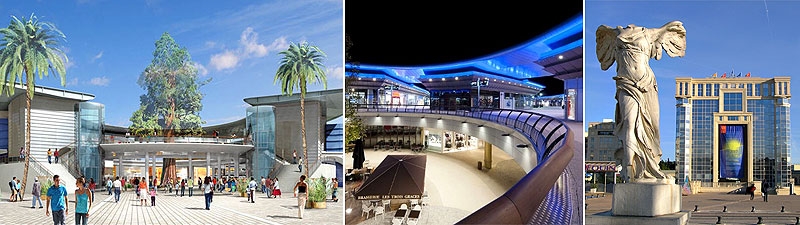
by Catalan architect Ricardo Bofill. Connects the historical centre and the banks of Lez, headquarter of the monumental Hôtel de Région. In its heart, an Olympic swimming pool and a well-stocked multimedia library
ODYSSEUM,
shops and leisures. A place between the sea and the city with a futurist architecture inspired in Ulysses journey and the space Odyssey. Aquarium and planetarium.
MONTPELLIER CELEBRATIONS
FESTIVAL DES ARCHITECTURES VIVES
June 15 - 19th, 2011
PRINTEMPS DES COMEDIENS
June 1st to 30th 2011 Domaine d'O
www.printempsdescomediens.com
FESTIVAL INTERNATIONAL MONTPELLIER DANSE
June 22nd - July 11th 2011
www.montpellierdanse.com
FESTIVAL DE RADIO FRANCE ET MONTPELLIER
July 11th - 28th 2011
www.festivalradiofrancemontpellier.com
LES ESTIVALES
July - August 2011
Every Friday, discovery of local products, artists, and second-hand booksellers.
JACQUES POURCEL’S FAVORITE PLACES
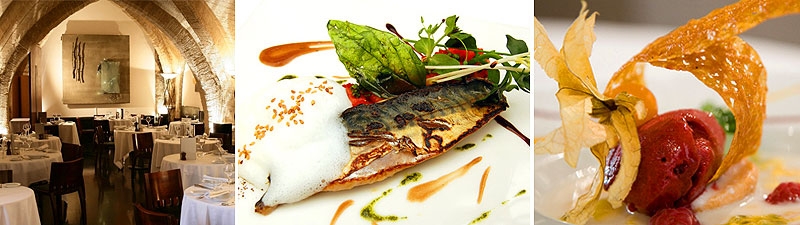
LA MAISON DE LA LOZÈRE.
For twenty years, Eric Cellier and Pierre Morel have been welcoming gourmets and gastronomes with their elegant smile. Their menu is filled with authenticity, passion and generosity, their cuisine is characterized by its daring, sensitive approach. You will definitely get the feeling. And enjoy spending a moment in that 13th century place, right at the centre of the city.
27 rue de l'aiguillerie MONTPELLIER
04 67 66 46 36
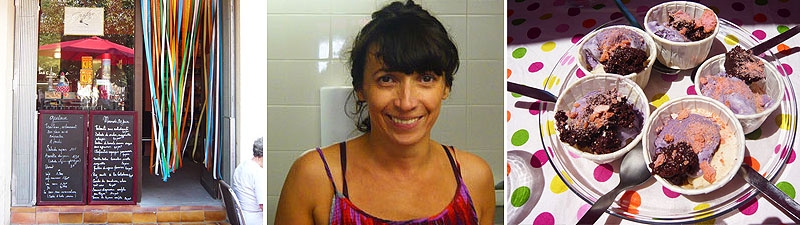
GUSTAVE
Delicatessen for gourmets and open air guinguette restaurant of the city. A fun place.
Nathalie, the little fairy of the restaurant is behind "Gustave". A delicious artist of the kitchen, a culinary creator. A book called "Le goût du parfum" was the starting point of the relationship that connects Nathalie Richin and Jacques & Laurent Pourcel. In that book, Nathalie "plated" the fragrant harmonies created by Christophe chabaud. Jacques & Laurent fell under the spell of the cheeky, mischievous young lady and entrusted her with l'Atelier de cuisine. For years, Nathalie and the Pourcel brothers combined their recipes and ideas. Then Nathalie left to settle in Place des Beaux Arts where she reinvented the guinguette spirit. A touch of sheer madness in that already crazily lively square. Coming soon, the "grignote" nights, dedicated to fish, seafood and shellfish, as well as homemade ice creams. To die for!
Gustave
4 place des Beaux Arts
34000 Montpellier
T. 04 67 70 37 87
From 5,50€ (soup) to 11,50€ (day's special)
Pasta 8,50€. Desserts, from 4€
RESTAURANT L'ARTICHAUT.
Laurent Paufert plays with fresh products in order to make a tasty, original cuisine, at the centre of the historical centre of Montpellier.
15bis rue Saint Firmin
34000 Montpellier
T.04 67 67 91 86
RBC. By Frank Argentin,
distributor of modern furniture.
For twenty years now, this charming, talented man has been welcoming designers and creators in the places he owns in Nimes, Montpellier, Gallargues, Lyon as well as in his catalogues.
Frank Argentin is now impatiently waiting for the opening of his last project. A unique place deigned by Jean Nouvel. A new space resulting from the imagination of two men. "A place to live, to be in, to discover. What we really want is for people to come and have a salad, buy a book, find some information, spend some time without even buying anything", Franck Argentin explains. Furniture, lights, kitchens, objects will be available next to the restaurant and the specialized library.
RBC Structures
13 rue Foch. Montpellier
T. 04 67 60 75 06
RBC Contract
2 plan d'AvilerMontpellier
T. 04 99 58 10 11
KCLUB
Fashion for men
Rue Jacques Cœur 34000 Montpellier
04 67 29 56 89
BERNARD BARRIÈRE JEWELLERY
Two shops for this family business that has been living in Montpellier since 1899. Bernard Barrière and his daughter Emmanuelle combine their savoir-faire to make your precious jewellery dreams come true.
Bernard Barrière
21, rue Foch
34000 Montpellier
T. 04.67.66.80.93
6 & 8 rue de l'Argenterie
34000 Montpellier
T. 04.67.66.10.59
CARTIER
Exclusive jewellery store
A must-see.
2 passage Lonjon
34000 Montpellier
T. 04 67 66 09 38
HERMES
Carrés, watches, leather goods
5 Rue Jacques Cœur, Montpellier
T.04 67 60 51 61

Newsletter produced by
Le Jardin des Sens - 11, avenue Saint-Lazare - 34000 Montpellier - France - Tél. 33(0)4 99 58 38 38
Press Contact : Laure de Carrière . m. 33 (0)6 20 14 32 88
You can unsubscribe from the newsletter by clicking on the link NoNews.